
Have you ever bought skincare products that promised glowing skin but didn’t deliver the results you expected? The reason could be simple—you may not know your actual skin type.
Understanding how to identify your skin type is the first and most important step towards building an effective skincare routine. Your skin type determines which cleanser, moisturizer, sunscreen, and treatment will work best for you. Using products meant for another skin type can lead to acne, dryness, irritation, or excessive oiliness.
Whether you’re struggling with pimples, dullness, sensitivity, or dryness, identifying your skin type helps you choose products that support healthier skin instead of causing further problems.
In this guide, the dermatologists at Dermet Clinic, Ahmedabad, explain how to determine your skin type, common characteristics of each skin type, and how to care for your skin correctly.
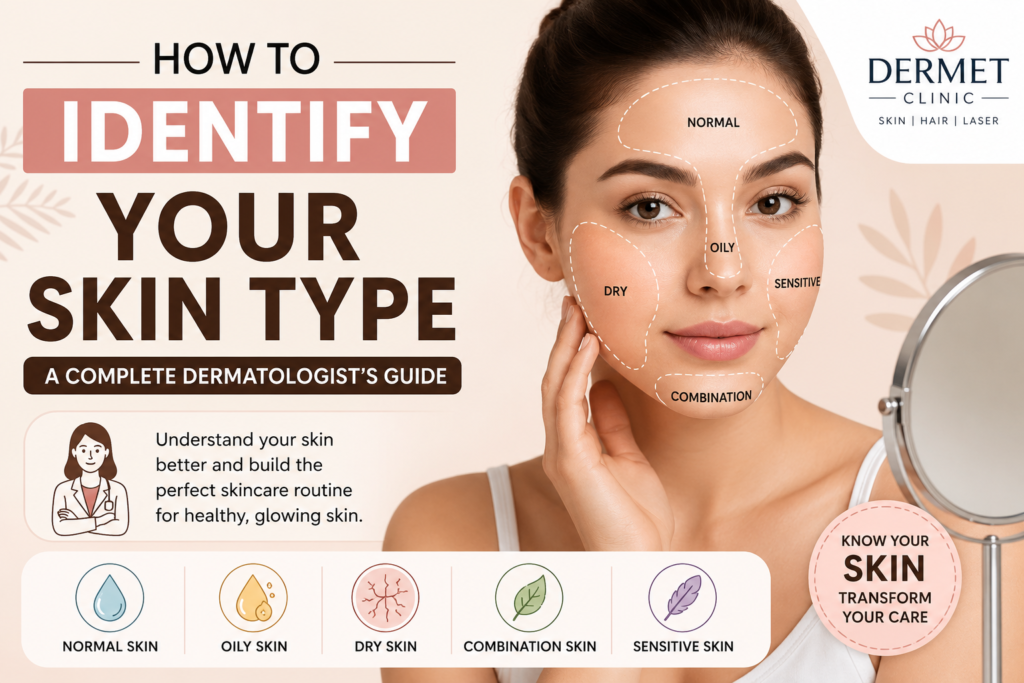
Why Is It Important to Know Your Skin Type?
Your skin is unique, and every skin type has different needs. When you know your skin type, you can:
- Choose suitable skincare products
- Prevent acne breakouts
- Reduce irritation and redness
- Maintain proper hydration
- Improve skin texture
- Slow down premature ageing
- Protect your skin barrier
Without knowing your skin type, even expensive skincare products may not provide the desired results.
The Five Main Skin Types
Dermatologists generally classify skin into five categories.
1. Normal Skin
Normal skin is well-balanced and healthy.
Characteristics include:
- Soft texture
- Small pores
- Even skin tone
- Minimal breakouts
- No excessive oiliness
- No excessive dryness
People with normal skin usually have fewer skin concerns but should still maintain a regular skincare routine.
2. Oily Skin
Oily skin produces excess sebum, making the face appear shiny throughout the day.
Common signs include:
- Greasy appearance
- Enlarged pores
- Frequent acne
- Blackheads
- Whiteheads
- Makeup wears off quickly
Although oily skin is more prone to acne, it may show signs of ageing slightly later than dry skin.
3. Dry Skin
Dry skin lacks sufficient natural oils and moisture.
Common symptoms include:
- Tightness after washing
- Rough texture
- Flaky patches
- Itching
- Fine lines
- Dull appearance
Dry skin requires extra hydration and products that strengthen the skin barrier.
4. Combination Skin
Combination skin is one of the most common skin types.
Typically:
- Oily forehead, nose, and chin (T-zone)
- Dry or normal cheeks
- Enlarged pores around the nose
- Occasional acne
People with combination skin often need products that balance both oily and dry areas.
5. Sensitive Skin
Sensitive skin reacts easily to environmental factors or skincare products.
Symptoms include:
- Redness
- Burning sensation
- Itching
- Stinging
- Rashes
- Allergic reactions
Sensitive skin requires gentle, fragrance-free products recommended by dermatologists.
How to Identify Your Skin Type at Home
You don’t always need special equipment to identify your skin type. Here are two simple methods.
Method 1: The Bare Face Test
This is one of the easiest ways to determine your skin type.
Step 1
Wash your face with a gentle cleanser.
Step 2
Pat your face dry.
Step 3
Do not apply any skincare products.
Step 4
Wait for about one hour.
Now observe your skin.
If your face feels tight
You likely have dry skin.
If your face becomes shiny everywhere
You probably have oily skin.
If only your forehead and nose become oily
You likely have combination skin.
If your skin feels comfortable
You probably have normal skin.
If your skin becomes itchy or irritated
You may have sensitive skin.
Method 2: The Blotting Paper Test
Take blotting paper and gently press it against different areas of your face.
Observe the amount of oil collected.
- Very little oil → Dry skin
- Moderate oil in T-zone only → Combination skin
- Heavy oil all over → Oily skin
- Minimal balanced oil → Normal skin
Factors That Can Affect Your Skin Type
Your skin type may change over time due to several factors.
These include:
- Age
- Hormonal changes
- Weather
- Climate
- Pregnancy
- Stress
- Diet
- Medications
- Medical conditions
- Skincare habits
For example, many people in Ahmedabad notice increased oiliness during summer and dryness during winter.
Common Mistakes People Make
Many people misidentify their skin type because of common skincare mistakes.
These include:
- Using harsh face washes
- Washing the face too frequently
- Skipping moisturiser
- Using products based on social media trends
- Ignoring sunscreen
- Treating temporary dehydration as dry skin
If you’re unsure, consulting a dermatologist is always the safest option.
Skincare Tips for Every Skin Type
For Oily Skin
- Use a gentle foaming cleanser.
- Apply lightweight moisturiser.
- Wear non-comedogenic sunscreen.
- Use products containing salicylic acid or niacinamide if recommended.
For Dry Skin
- Choose cream-based cleansers.
- Apply moisturiser immediately after washing.
- Avoid hot water.
- Look for ceramides and hyaluronic acid.
For Combination Skin
- Cleanse gently twice daily.
- Moisturise the entire face.
- Use lightweight products.
- Avoid over-drying oily areas.
For Sensitive Skin
- Perform a patch test before trying new products.
- Choose fragrance-free skincare.
- Avoid excessive exfoliation.
- Protect your skin with sunscreen every day.
For Normal Skin
- Maintain a simple skincare routine.
- Cleanse twice daily.
- Moisturise regularly.
- Apply sunscreen every morning.
When Should You Visit a Dermatologist?
If you experience any of the following, it’s time to consult a dermatologist:
- Persistent acne
- Severe dryness
- Frequent allergic reactions
- Pigmentation
- Rosacea
- Eczema
- Sudden skin changes
- Chronic redness
- Unexplained itching
A dermatologist can accurately assess your skin and recommend treatments tailored to your specific needs.
Why Choose Dermet Clinic?
At Dermet Clinic, Ahmedabad, experienced dermatologists provide personalised skin assessments using advanced diagnostic methods.
Whether you have oily, dry, sensitive, combination, or acne-prone skin, the team creates customised treatment plans that may include:
- Acne treatment
- Pigmentation treatment
- Chemical peels
- HydraFacial
- Laser treatments
- Anti-ageing procedures
- Medical skincare guidance
Professional advice helps you avoid unnecessary products and achieve healthier, long-lasting results.
Conclusion
Knowing how to identify your skin type is the foundation of healthy skincare. Once you understand whether your skin is oily, dry, combination, sensitive, or normal, choosing the right products becomes much easier.
Remember that your skin can change with age, weather, hormones, and lifestyle. Paying attention to these changes and following a suitable skincare routine can significantly improve your skin’s health and appearance.
If you’re still unsure about your skin type or facing persistent skin concerns, visiting a qualified dermatologist is the best way to receive an accurate diagnosis and personalised treatment plan.
At Dermet Clinic, Ahmedabad, our dermatologists are committed to helping you understand your skin and recommend treatments that suit your unique needs.
Frequently Asked Questions (FAQs)
1. How can I identify my skin type at home?
Wash your face, wait for one hour without applying any products, and observe whether your skin becomes oily, dry, balanced, or irritated.
2. Can my skin type change over time?
Yes. Age, hormones, weather, stress, pregnancy, and certain medications can all influence your skin type.
3. Is oily skin always acne-prone?
Not always. While oily skin is more likely to develop acne, proper skincare can help reduce breakouts.
4. What is the difference between dry skin and dehydrated skin?
Dry skin lacks natural oils, while dehydrated skin lacks water. Even oily skin can become dehydrated.
5. Should I use moisturiser if I have oily skin?
Yes. Oily skin still needs hydration. Choose a lightweight, oil-free, non-comedogenic moisturiser.
6. When should I consult a dermatologist?
If you have persistent acne, severe dryness, pigmentation, redness, or skin irritation that doesn’t improve with routine skincare, it’s best to consult a dermatologist.